Game
Sokoban Sumo
A puzzle game that respects player intelligence. Built in Godot with 5 distinct game modes and 15+ unlockable characters.
Engine
Status
In Development
Platforms
PC / Web
Why Game Design Matters for Product Design
Puzzle games require clear feedback loops, minimal friction, and respect for player intelligence. These are exactly the design challenges in developer tools.
Claude Code faces similar problems: communicating progress during autonomous work, handling failures gracefully, making complex behaviors feel intuitive, knowing when to ask for input vs. proceed independently.
Building games forced me to think deeply about interaction patterns that don't have established conventions yet.
Design Highlights
5 Distinct Game Modes
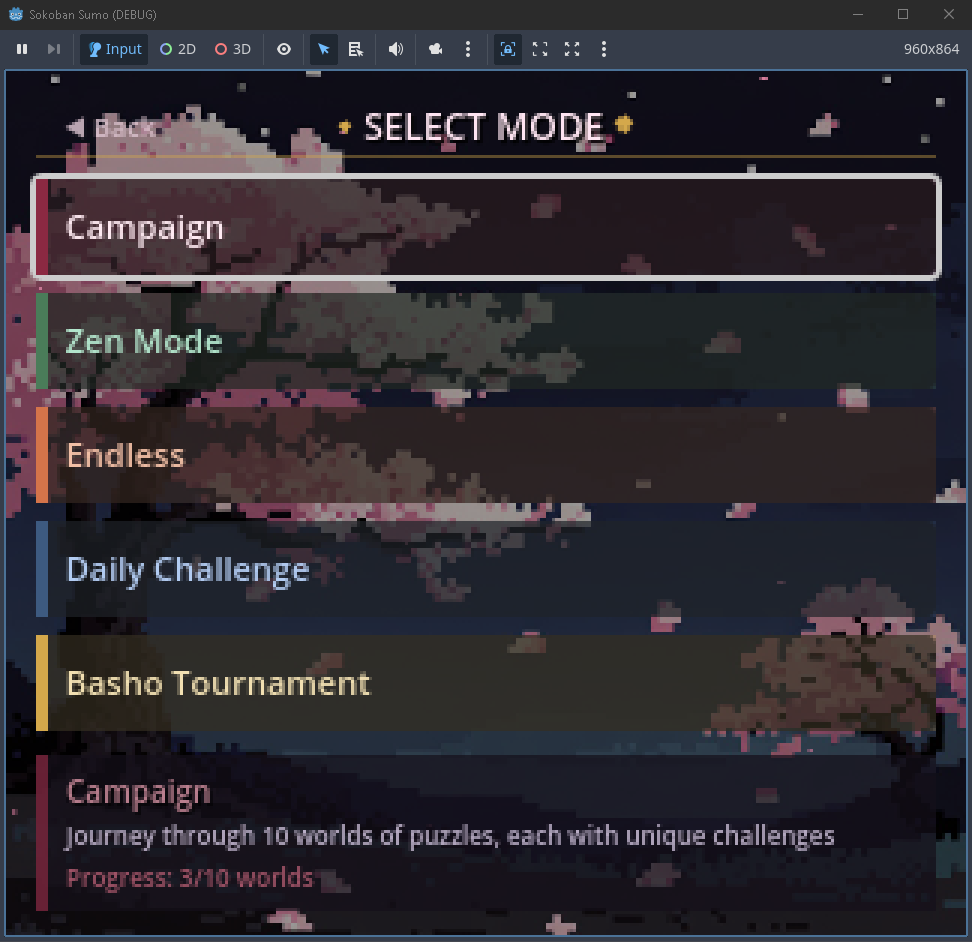
Campaign, Zen Mode, Endless, Daily Challenge, Basho Tournament. Different modes for different moods and session lengths. Some players want progression, others want relaxation, others want competition.
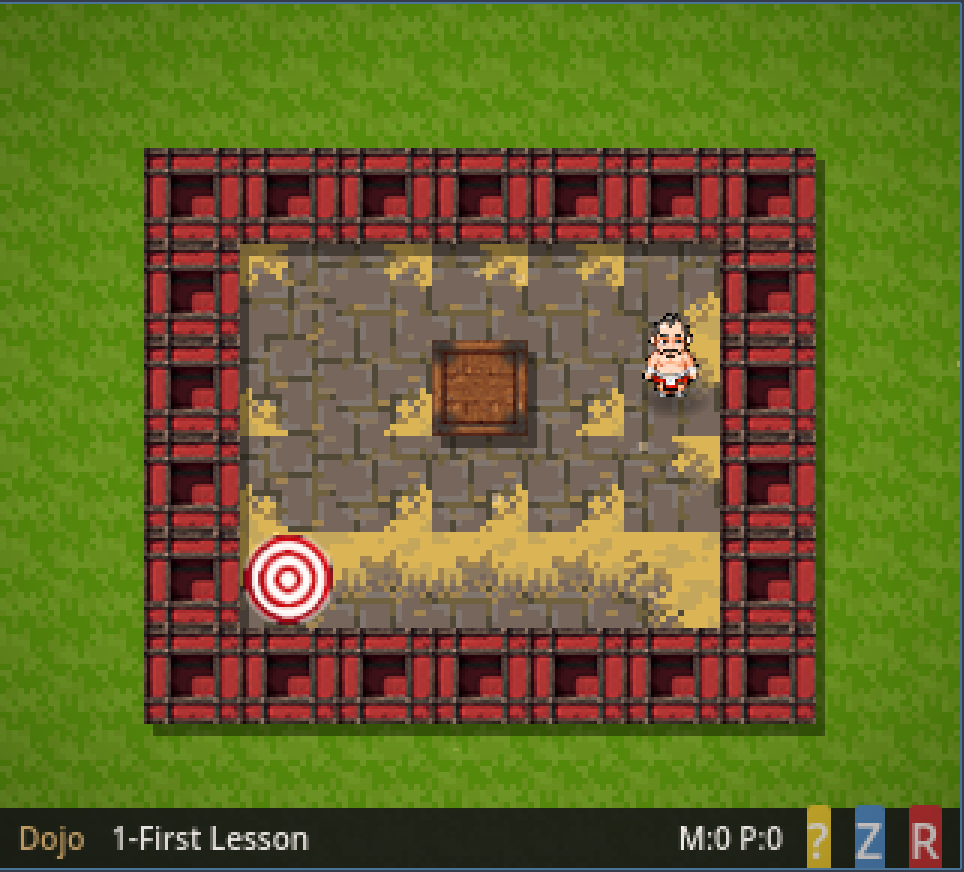
Clean HUD
Level name, move counter, push counter, undo (Z), reset (R). Minimal but complete. Every element earns its screen real estate. The puzzle is the focus, not the interface.
Color-Coded Mode Selection
Each mode has a distinct left border color for quick scanning. No need to read labels if you know "blue is Campaign, green is Zen." Reduce cognitive load through visual hierarchy.
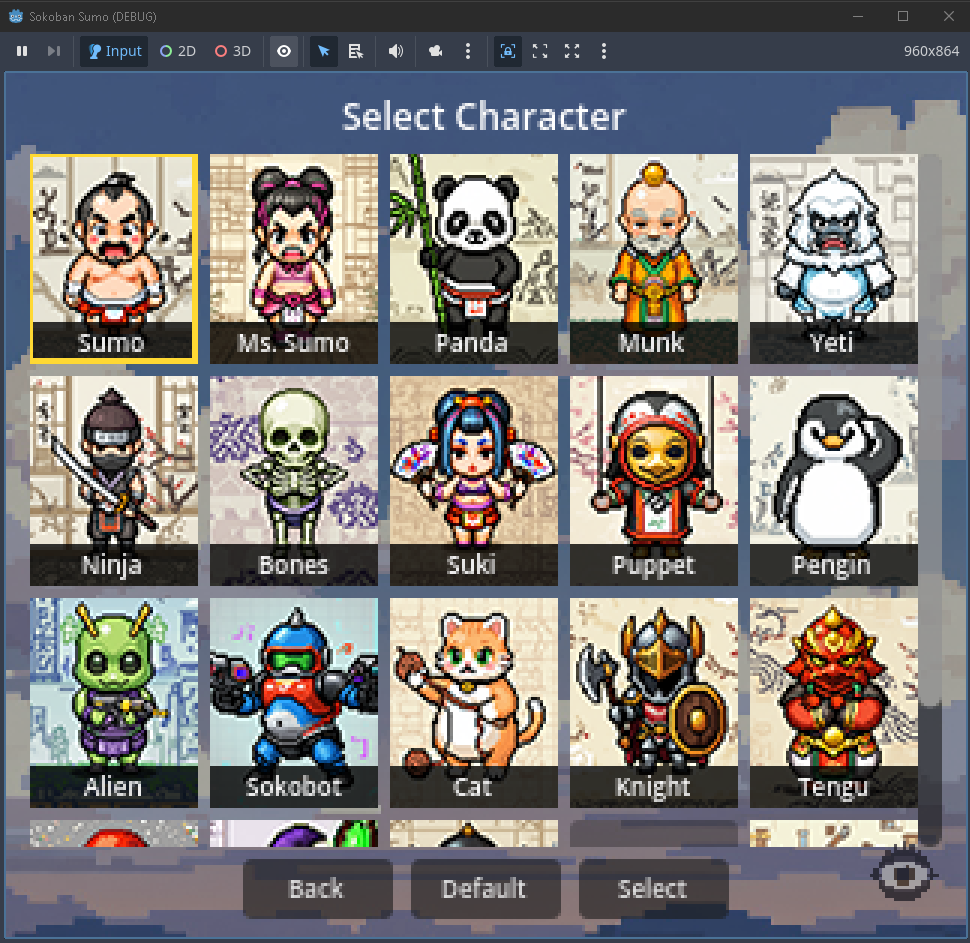
15+ Unlockable Characters
Cosmetic variety drives player investment. Characters don't change gameplay, but they make progress feel tangible. Grid layout with locked/unlocked states provides clear goals.
Atmosphere Without Distraction
Cherry blossom pixel art background adds personality without competing with gameplay. The visual style is warm and inviting but fades into the periphery during puzzles.